SKYLIGHTS

Skylights featured on Astronomy Picture of the Day


Scout Report Selection Webivore Selection SpaceCareers Selection

Skylights featured nine times on Earth Science Picture of the Day: 1 2 3 4 5 6 7 8 9

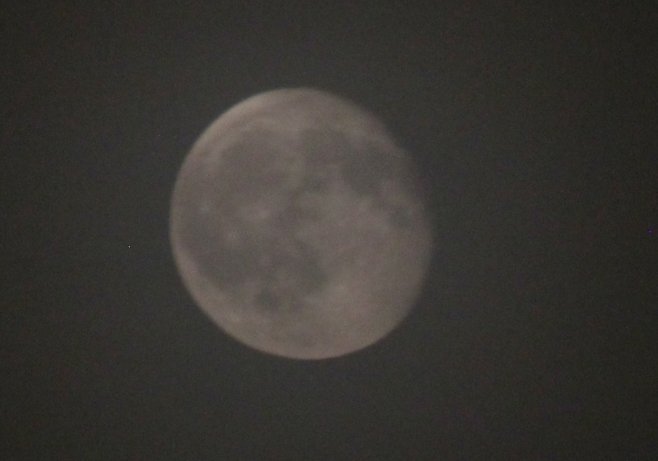
Moonrise

Photo of the Week..Dim, rosy moonrise.


Astronomy news for the two weeks starting Friday, November 4, 2016.

Phone: (217) 333-8789
Prepared by Jim Kaler.

Clear skies and thanks to Skylights' blogger visitor reader.


Go to STARS for previous stars of the week. Last week's Skylights is still available. Access Skylights' Archive and photo gallery. From the Sun to the Stars: the OLLI Lectures provides a linked, illustrated introduction to astronomy.
The Constellations has a linked list with locations and brightest stars. Constellation Maps show the locations of the constellations. The 170 Brightest Stars lists them through magnitude 3.00. For more on stars and constellations, visit Stellar Stories.
Tour the Milky Way. Watch a total eclipse of the Moon and an annular eclipse of the Sun. Moon Light presents scenic photos of the Moon. Go to MoonScapes for labelled telescopic images of the Moon and other lunar information.
See the Moon move and pass just below Nu Virginis. Watch planets move against the background stars. See a classic proof of the curvature of the Earth with a "hull down" series. Visit Measuring the Sky to learn about the celestial sphere.
Admire sunsets, rainbows, and other sky phenomena in Sunlight. Read the illustrated Day Into Night on the phenomena of the sky See the The Aurora and the Midnight Sun. See and understand the ocean tides.
Enjoy Our Complex Universe: A Human Understanding through Art, with 12 illustrations. Advances in Astronomy, 1989-2011. Take a ride aboard Asteroid 17851 Kaler (1998 JK). Look for Books about the sky and stars.

SG
Logo

ASPSupport science literacy by joining the Astronomical Society of the Pacific, an international organization that is among the world's premier providers of astro education. Get Mercury and a variety of other benefits.


Presenting three audio courses with 70 to 100-page study guides, narrated and written by Jim Kaler.
Heavens Above: Stars, Constellations, and the Sky from Recorded Books. Astronomy: Earth, Sky, and Planets, is available from Recorded Books. Astronomy: Stars, Galaxies, and the Universe, is also now available from Recorded Books.
Astronomy: Earth, Sky, and Planets is published as Vault of the Heavens: Exploring the Solar System's Place in the Universe by Barnes and Noble.

Enjoy Our Complex Universe:A Human Understanding through Art, with 12 illustrations.

Read "Heaven's Touch: From Killer Stars to Seeds of Life, How We Are Connected to the Universe," Princeton University Press, now in Chinese translation.

SSTo learn about stellar spectra, read STARS AND THEIR SPECTRA: An Introduction to the Spectral Sequence, Second Ed., with two new chapters and 140 new illustrations, Cambridge University Press (UK or North America), 2011.


SSLive in town? Read FIRST MAGNITUDE: A Book of the Bright Sky, World Scientific, 2013. See the interview with Jim Kaler.


NEW! Read Dust to Dust in Stellar Stories.

NEW! From the Sun to the Stars: the OLLI Lectures, which provides a linked, illustrated introduction to astronomy.


The next skylights will appear November 18, 2016.

Daylight Time ends on Sunday, November 6, so the clocks get turned back an hour. All times below are standard.

We first see a bit of the fat waxing crescent Moon, the phase terminated at first quarter on Monday, November 7, shortly after moonset in North America. It then grows and brightens rapidly through waxing gibbous to full phase on Monday the 14th again just past moonset. By the time the moon (the Frosty Moon, the Beaver Moon) rises that night it will already be in the waning gibbous, which shrinks through the rest of the fortnight until last quarter is passed on Monday the 21st with the Moon climbing the eastern sky, following which it thins in the waning crescent.

The Moon passes perigee, where it is closest to the Earth on Monday the 14th, just three hours before full for a sort of "supermoon," which is visually not noticeable but that will bring especially high and low tides to the coasts. Thanks to the Sun's gravity and other factors, the Moon's orbit is not quite elliptical, which slightly changes the distance at perigee, this one being especially close (356,509 km, 221,525 miles), closer than at any time until 2020.

The night of Monday the 14th, the full Moon will lie near the tip the "vee" that makes the head of Taurus the Bull as it enters the Hyades star cluster, the stars rendered near invisible by the Moon except perhaps for Aldebaran, which will lie just above the Moon (and is not actually a part of the cluster), the Moon occulting the star after moonset.

Mars still hangs around a bit after sunset. Falling only slowly behind the Earth with sunset getting earlier, the planet will set around 9:30 PM for the rest of the year. The Moon will appear to the northwest of the planet the evening of Saturday the 5th, to the northeast of it the following night. Venus quite overwhelms the red planet, Getting higher each evening, it finally crosses over to set in the southwest after twilight as our period ends. We then wait the rest of the night for Jupiter, which rises around 4 AM at the beginning of our period, an hour later at the end. The Moon will appear to the west of Jupiter the morning of Thursday the 24th, to the east the following morning.

The Leonid meteor shower, which traditionally hits the morning of November 17th, will produce very little activity, most of which will be destroyed by the bright Moon. The shower is the debris of Comet Tempel-Tuttle">, which has a 33-year period around the Sun and long-since passed by.

The summer constellations of Scorpius and Sagittarius disappear to the west. Look now for that great sign of fall, the lonely star Fomalhaut of Piscis Austrinus (the Southern Fish), which crosses the southern horizon in mid-evening. Directly above lies the zodiacal constellation Aquarius with its "Y"-shaped water jar. If you are far enough south, you might meet Grus, the Crane, which indeed looks like a giant bird stalking the horizon in advance of Fomalhaut.

STA OF THE WEEK: PSI SGR (Psi Sagittarii). The "Pointers" of the Big Dipper in Ursa Major are famous for directing the eye northwards toward Polaris, while those of Corvus point eastward towards Spica in Virgo. The counterpart stars in Sagittarius, those of the Little Milk Dipper, sadly don't point toward much of anything except the blanket of stars of the Milky Way, But if you run them backwards three of four degrees toward the northwest, you encounter fifth magnitude (4.85) Psi Sagittarii, which also lies about five degrees west of the constellation's second brightest star, second magnitude triple stars. It's not an easy task to separate them. Psi Sgr first looks like a very close double with components separated by just a fraction of a second of arc, wherein one of the two is also a closer binary as determined by spectral analysis. This sort of setup is the only way a triple star can be stable. If you put the stars at comparable distances from one another, an inevitable fast close encounter between two of them will kick one out of the system at high speed and we wind up with a close double and a runaway star. For stability, we need a tertiary star far enough from an inner binary such that the tertiary "sees" the binary as a single star or gravitational point. Then the trio can be together practically forever. Psi Sgr, 298 light years away (with an uncertainty of about 9), may set some kind of record for attempts to establish the spectral classes as the light of the three blends together. You can find anything from class K to A. Apparently the outer star is a class G (G8) giant, while the inner pair consists of an A9 giant and an A7 dwarf. The inner, close, pair orbits every 10.78 days. Assuming published masses of 2.1 and 2.7 Suns, they average 0.15 AU apart, less than half Mercury's distance from the Sun. These two then mutually orbit the class G giant every 19.95 years. An established (if crude) orbit makes them 12.08 AU apart, a rather high eccentricity ferrying the stars between seven and eighteen AU at the extremes, the whole system nicely satisfying the criterion for a stable triple. They were last closest near the very end of the year 2014. Kepler's laws give a total mass to the trio of 7.7 times that of the Sun, which, given the large orbital uncertainties, is surprisingly close to the five or so solar masses estimated from evolutionary considerations. From the outer star, which seems to be a dying helium-fusing giant, the inner pair would be a blindingly bright duo at most three-quarters of a degree apart. The outer one will be the first to slough its outer envelope and perhaps produce a planetary nebula with the old nuclear-burning core turning into a white dwarf. As the inner pair evolves, the individuals may well merge as they expand as giants, then produce another planetary nebula, leaving us finally with a simple double instead of the triple star we see now. (Thanks to K. G. Strassmeier and F. C. Fekel in Astronomy and Astrophysics, 230, 389, 1990, for their summary of the stellar characteristics.)