SKYLIGHTS

Skylights featured on Astronomy Picture of the Day


Scout Report Selection Webivore Selection SpaceCareers Selection

Skylights featured nine times on Earth Science Picture of the Day: 1 2 3 4 5 6 7 8 9

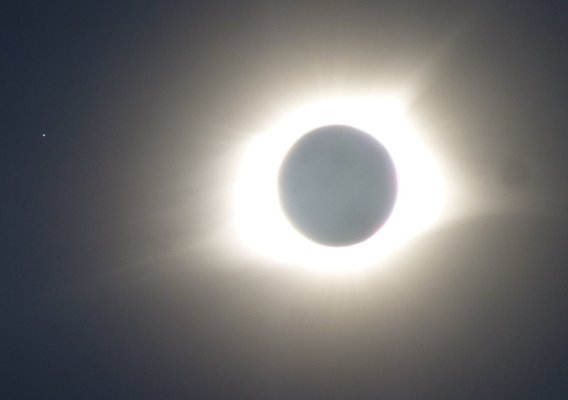
Sunset

Photo of the Week. Sunset.


Astronomy news for the two weeks starting Friday, May 24, 2013.

Phone: (217) 333-8789
Prepared by Jim Kaler.

Clear skies and thanks to Skylights' blogger visitor reader.


Go to STARS for previous stars of the week. Last week's Skylights is still available. Access Skylights' Archive and photo gallery. From the Sun to the Stars: the OLLI Lectures provides a linked, illustrated introduction to astronomy.
The Constellations has a linked list with locations and brightest stars. Constellation Maps show the locations of the constellations. The 170 Brightest Stars lists them through magnitude 3.00. For more on stars and constellations, visit Stellar Stories.
Tour the Milky Way. Watch a total eclipse of the Moon and an annular eclipse of the Sun. Moon Light presents scenic photos of the Moon. Go to MoonScapes for labelled telescopic images of the Moon and other lunar information.
See the Moon move and pass just below Nu Virginis. Watch planets move against the background stars. See a classic proof of the curvature of the Earth with a "hull down" series. Visit Measuring the Sky to learn about the celestial sphere.
Admire sunsets, rainbows, and other sky phenomena in Sunlight. Read the illustrated Day Into Night on the phenomena of the sky See the The Aurora and the Midnight Sun. See and understand the ocean tides.
Enjoy Our Complex Universe: A Human Understanding through Art, with 12 illustrations. Advances in Astronomy, 1989-2011. Take a ride aboard Asteroid 17851 Kaler (1998 JK). Look for Books about the sky and stars.

SG
Logo

ASPSupport science literacy by joining the Astronomical Society of the Pacific, an international organization that is among the world's premier providers of astro education. Get Mercury and a variety of other benefits.


Presenting three audio courses with 70 to 100-page study guides, narrated and written by Jim Kaler.
Heavens Above: Stars, Constellations, and the Sky from Recorded Books. Astronomy: Earth, Sky, and Planets, is available from Recorded Books. Astronomy: Stars, Galaxies, and the Universe, is also now available from Recorded Books.
Astronomy: Earth, Sky, and Planets is published as Vault of the Heavens: Exploring the Solar System's Place in the Universe by Barnes and Noble.

Enjoy Our Complex Universe: A Human Understanding through Art, with 12 illustrations.

Read "Heaven's Touch: From Killer Stars to Seeds of Life, How We Are Connected to the Universe," Princeton University Press.

SSTo learn about stellar spectra, read STARS AND THEIR SPECTRA: An Introduction to the Spectral Sequence, Second Ed., with two new chapters and 140 new illustrations, Cambridge University Press (UK or North America), 2011.


NEW! From the Sun to the Stars: the OLLI Lectures provides a linked, illustrated introduction to astronomy.

SSNEWEST! FIRST MAGNITUDE: A Book of the Bright Sky, World Scientific, 2013. Read the interview with Jim Kaler.


NEW! Read Twins in Stellar Stories.

NEW! The Tides.


The next Skylights will appear Saturday, June 8. We begin the fortnight with the full Moon the night of Friday, May 24, when there will be a rather odd eclipse, one in which the southern edge of the Moon will barely clip the Earth's penumbral shadow (the region of partial shadow in which just some sunlight is cut off). The maximum effect, at 11:10 PM CDT, will be so small as to be invisible to the eye. Take a look though, and you might spot the star Antares in Scorpius to the south of the Moon. The Moon then spends a week in the waning gibbous, passing third quarter on Friday the 31st, whence it slims through crescent until it hits new Moon on Saturday, June 8. Your last glimpse of the ultrathin crescent will be in eastern twilight the morning of Friday the 7th. The Moon will pass perigee, where it is closest to the Earth, just a day past full, which will bring especially high and low tides to the coasts.

The twilight evening sky features a wonderful alignment of planets, a trio made of Mercury, Venus, and Jupiter. Look early and low on the horizon during the first week of our fortnight to see them changing places, Venus the brightest, followed by Jupiter, then Mercury. The tightest knot will be on the evenings of Sunday the 26th and Monday the 27th. On successive nights, Jupiter drops, while the other two climb. Formal conjunctions take place between Mercury and Venus the night of Friday the 24th (Mercury to the north), Mercury and Jupiter during the day on Monday the 27th, and Venus and Jupiter the afternoon of Tuesday the 28th. Jupiter then quickly passes out of sight. You'll need a clear northwestern horizon. Binoculars will help. Mercury and Venus then become increasingly visible (Mercury on top), though even by the end of our two-weeker both still set before twilight fully draws to a close.

Once they are gone, we are left with lonely Saturn. Beginning the evening in the southeastern sky well to the east of Spica in Virgo, by the end of the month the ringed planet will cross the meridian to the south around 10:30 PM daylight time. It then remains with us in the southwest until just after dawn begins to light the sky. In the early evening, the stars of spring are in full bloom, Leo a bit west of the meridian, Virgo pretty much upon it, the Big Dipper nearly overhead as it prepares to slip into northwestern skies, orange Arcturus brilliant to the south of the Dipper's handle. Look later on in the northeast for a great harbinger of the coming summer, Vega in Lyra, the star just barely fainter than Arcturus.

STAR OF THE WEEK: OMEGA LEO (Omega Leonis). Holding up the rest of Leo's Greek-lettered stars about 10 degrees west southwest of Regulus, find fifth magnitude (at 5.41 nearly sixth) Omega Leonis. Just 1.5 degrees east of Leo's border with Cancer, it's also Flamsteed's number 2, just beaten out for the first spot going east in Leo by better-known Kappa Leo (Al Minliar al Asad) well to the north. However, while Kappa is a rather ordinary class K giant, Omega (108 light years away, give or take 5) is intriguingly near-solar. Nominally a cool class F (F9) dwarf (perhaps even G1), it's also a double with the components at most a second or so of arc apart. Sixth magnitude (given as 5.69) Omega A, the F9 dwarf, is accompanied by seventh magnitude (7.28) Omega B, whose absolute visual brightness is consistent with it being a G2 dwarf like the Sun, or at least close (the two adding to magnitude 5.46, close enough). From the nineteenth century, Smythe and Chambers call them "An exquisite close double star... A pale yellow, B greenish." Herschel first measured them at a mere 0.4 seconds apart! At an average separation of 28.6 Astronomical Units, not quite Neptune's distance from the Sun, the two take 118.0 days to orbit each other, a hefty eccentricity bringing them as close as 12.6 AU out to 44.5 AU and back. They were last physically closest in 1959, and will be farthest apart in 2018. Kepler's Laws give a total system mass of 1.67 times that of the Sun, oddly low and probably showing that the orbit needs improvement (as also noted below).

Omega Leo Omega Leo B, a sunlike star, orbits somewhat more massive Omega A (at the cross) every 118 years at an average separation of 28.6 Astronomical Units, at least according to the orbital solution (the orbital size perhaps larger). In reality, the two orbit a common center of mass. The true major axis of the elliptical orbit, the dot-dash line, is offset from that of the observed ellipse because of the orbital tilt of 65 degrees to the plane of the sky combined with the orbit's orientation. From the Sixth Catalog of Orbits of Visual Binary Stars , W. I. Hartkopf and B. D. Mason, US Naval Observatory Double Star Catalog, 2006.

Omega A has a well-determined temperature of 5940 Kelvin, while we can adopt the Sun's 5780 Kelvin for "B." Minor adjustments for infrared radiation then yield a luminosity of 4.9 times that of the Sun for "A" (and suggest it to be a subgiant), 1.2 for B. Masses would then be approximately 1.3 and 1.0 Suns (the decimal uncertain), for a system mass of 2.3, well above that derived from the orbit. The two can be reconciled by expanding the orbital size by 11 percent to 31.7 AU. Once thought to be part of the widespread youngish (500 million year old) Ursa Major moving group (which is related to the Ursa Major cluster in the Big Dipper), Omega Leo seems actually to be the brightest member of a completely separate, much older (300 billion years) metal-rich moving group, Omega's metals relative to hydrogen up from solar by around 40 percent, the other half dozen or so members scattered around the sky. The age is roughly consistent with Omega A being a subgiant whose core hydrogen is close to running out, if it has not done so already. Omega Leo also displays no cycle in magnetic activity which, since stars rotate more slowly with time (rotation helping to produce magnetic fields), is consistent with higher age as well. While there is no evidence for any planets, how fascinating it would be for a resident to have another star to which one could easily travel.


Valid HTML 4.0! Copyright © James B. Kaler, all rights reserved. The written contents and (unless otherwise specified) the photograph are the property of the author and may not be reproduced in whole or in part without the author's consent except in fair use for educational purposes.